
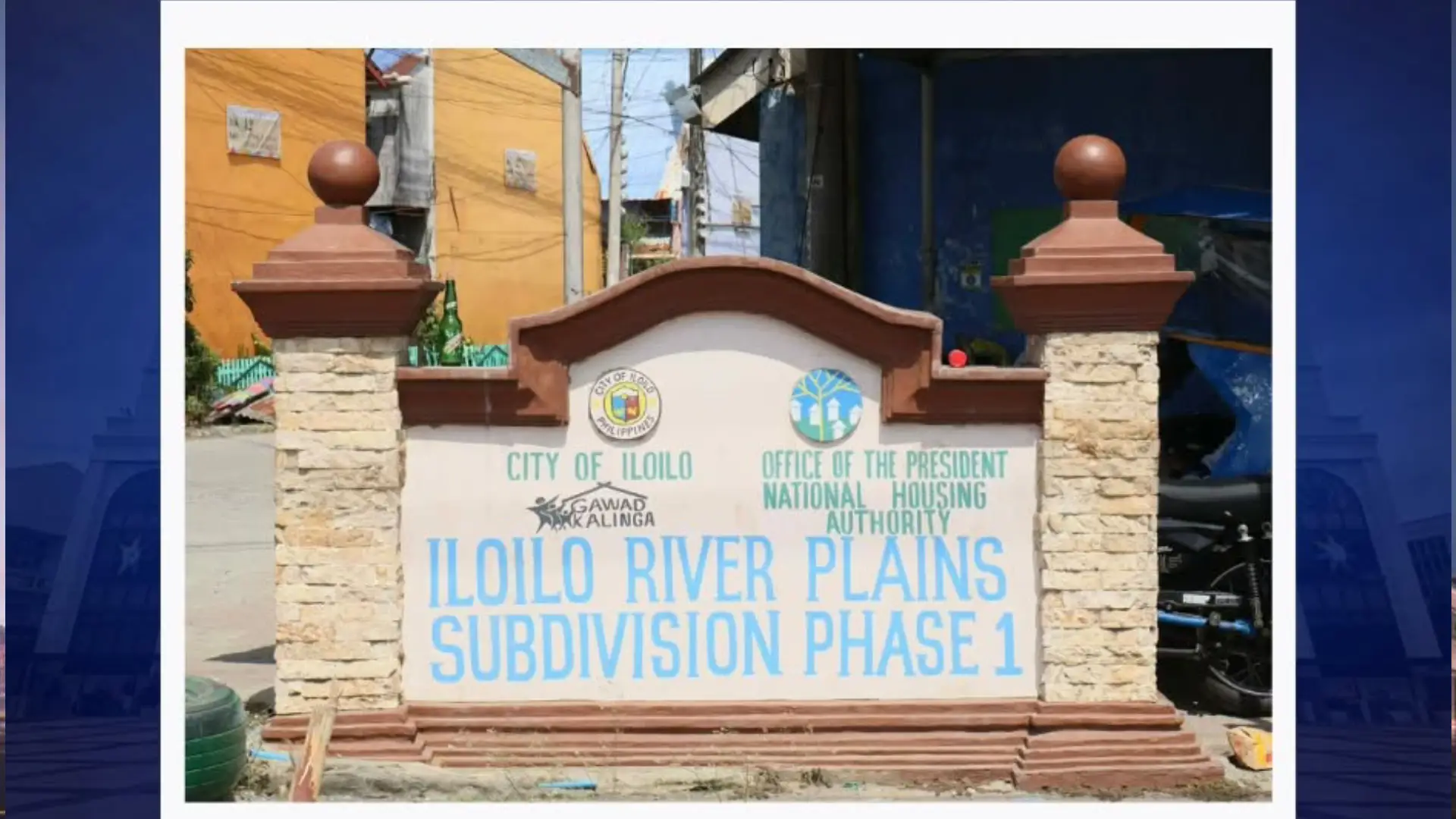
Beneficiaries of the Iloilo River Plains Subdivision resettlement project are already occupying their housing units without formal documents securing their rights to the properties, while the Iloilo City Government faces the risk of failing to recover the costs of land, development and housing construction under a project involving ₱54 million in loans payable to the National Housing Authority (NHA).
The Commission on Audit (COA), in its 2025 audit findings on the Iloilo City Government, attributed the failure to implement post-relocation and tenure-related activities to the NHA’s failure to submit an approved subdivision plan and formally turn over the completed infrastructure projects to the city government.
The audit finding raises concerns over the implementation of a resettlement project intended to provide housing assistance to 1,000 families living along the Iloilo River and its tributaries who are affected by the city’s river development program.
In its report, COA said the failure to complete the required post-relocation and tenure activities was inconsistent with the tripartite agreement among the NHA, Iloilo City Government and the Office of Senator Franklin M. Drilon.
The audit agency warned that the continuing delays pose reputational risks to the agencies involved and could prevent the city government from recovering the project’s costs from beneficiaries.
Beneficiaries occupy homes without formal security of tenure
COA’s monitoring revealed that beneficiaries were already occupying the residential units at the subdivision but had yet to receive formal documents securing their rights to the properties.
Under the tripartite agreement, security of tenure was supposed to be granted through a usufruct agreement, a conditional contract to sell or another form of conveyance that could be approved by the Sangguniang Panlungsod.
However, the completion of these tenure-related arrangements remained stalled because the NHA had not fulfilled key obligations necessary for the city government to proceed.
According to the audit report, the NHA was responsible for preparing the project’s development plans, technical specifications and cost estimates, as well as turning over the completed infrastructure works to the city government.
The city, meanwhile, was tasked with undertaking pre-relocation, relocation and post-relocation activities, managing the disposition of lots, collecting fees and charges from identified beneficiaries, and recovering the costs of land, land development and housing construction.
The absence of the approved subdivision plan and formal infrastructure turnover effectively left the city government unable to complete the documentation and other arrangements needed to secure the beneficiaries’ tenure.
COA noted that the subdivision plan submitted by the NHA to the Land Management System (LMS) had yet to be approved at the time of the audit, despite the city’s efforts to coordinate with the agency and facilitate the processing of the required documents.
The delay leaves a critical gap between the provision of housing units and the formalization of beneficiaries’ rights to their homes.
NHA and city government face accountability questions
While COA identified the NHA’s failure to submit the approved subdivision plan and formally turn over the infrastructure as the main reason for the delay, it also stressed that the Iloilo City Government should have exercised greater diligence in ensuring that the housing agency fulfilled its contractual obligations.
The audit report pointed out that the responsibilities of each party were clearly defined in the tripartite agreement. The delays, therefore, were not simply an administrative inconvenience but a failure to complete agreed project deliverables.
COA said the city government should have undertaken closer monitoring, coordination and formal demands to compel the NHA to comply with its obligations.
The report also highlighted an institutional accountability issue: implementation of the project was originally assigned to the Iloilo City Urban Poor Affairs Office (ICUPAO) but was subsequently transferred to the Iloilo City Local Housing Office (ICLHO).
Representatives of the ICLHO told auditors that they could no longer determine the root cause of delays attributable to the former office. Nevertheless, the current office assumed responsibility for addressing the outstanding concerns involving post-relocation and security of tenure.
The transition between offices raises questions about continuity in project monitoring, the preservation of records and the identification of officials responsible for unresolved deliverables.
COA’s findings do not, by themselves, establish criminal liability or wrongdoing by any particular official. However, they underscore the need to determine why the agreement’s requirements remained unfulfilled, what monitoring and enforcement measures were undertaken, and which offices or officials were responsible for the continuing delays.
The audit agency warned that failure to implement the agreement could damage the reputations of the agencies involved, expose them to possible interest and penalties, and create a negative perception among the public and other stakeholders.
₱54-million loan recovery at risk
Beyond the unresolved tenure documents, COA identified a substantial financial risk arising from the project’s implementation delays.
The report warned that the city government might fail to recover the costs of the land, land development and housing construction from the beneficiaries. These recoveries are intended to be used to pay the ₱54 million in loans payable to the NHA.
The potential consequence is that the city could face difficulty collecting the amounts needed to settle its financial obligations if the mechanisms for formalizing ownership or tenure and collecting beneficiary payments remain incomplete.
The audit finding does not establish that the entire ₱54 million has already been lost or that the loan is necessarily in default. Rather, it identifies a risk that delayed project implementation and unresolved tenure arrangements could undermine the recovery of the amount owed to the NHA.
The situation also raises questions about how the city government can effectively enforce payment obligations when the formal documentation governing beneficiaries’ rights to their housing units has not been completed.
In response to the outstanding issues, city management informed auditors that it was coordinating with the Home Development Mutual Fund, or Pag-IBIG Fund, to extend loans to beneficiaries and facilitate the transfer of ownership to them. The proceeds of these loans would then be remitted to the NHA.
However, the proposed financing arrangement depends on the completion of the necessary documentation and the processing of the beneficiaries’ ownership transfers. Until these steps are completed, the recovery of the project’s costs remains exposed to implementation and collection risks.
COA orders action plan and demands on NHA
To address the deficiencies, COA recommended that the head of the Iloilo City Local Housing Office formulate and implement an action plan to expedite the issuance of security-of-tenure documents to beneficiaries and facilitate the recovery of the project’s land and loan costs.
The audit agency also directed the city office to closely coordinate with the NHA and formally demand compliance with its obligations, particularly the preparation of the subdivision plan and the turnover of the completed infrastructure.
It further recommended expediting all remaining post-relocation and tenure-related activities.
According to the report, management agreed to the recommendations.
The critical test now is whether the city government can translate these commitments into concrete action: secure the necessary approvals, obtain the formal turnover of the infrastructure, complete the beneficiaries’ tenure documents and establish a workable mechanism for recovering the project’s costs.
For the 1,000 families the project was intended to assist, the unresolved documentation means that occupying a house has not yet translated into formally secured rights to the property. For the government, continued delays could place the recovery of millions of pesos in public financial obligations at risk.
The COA findings ultimately point to a central accountability question: Why have essential project deliverables remained unfinished despite a clearly defined agreement, and what concrete measures will the NHA and Iloilo City Government take to protect beneficiaries’ housing rights and ensure the recovery of the ₱54 million payable to the housing authority?