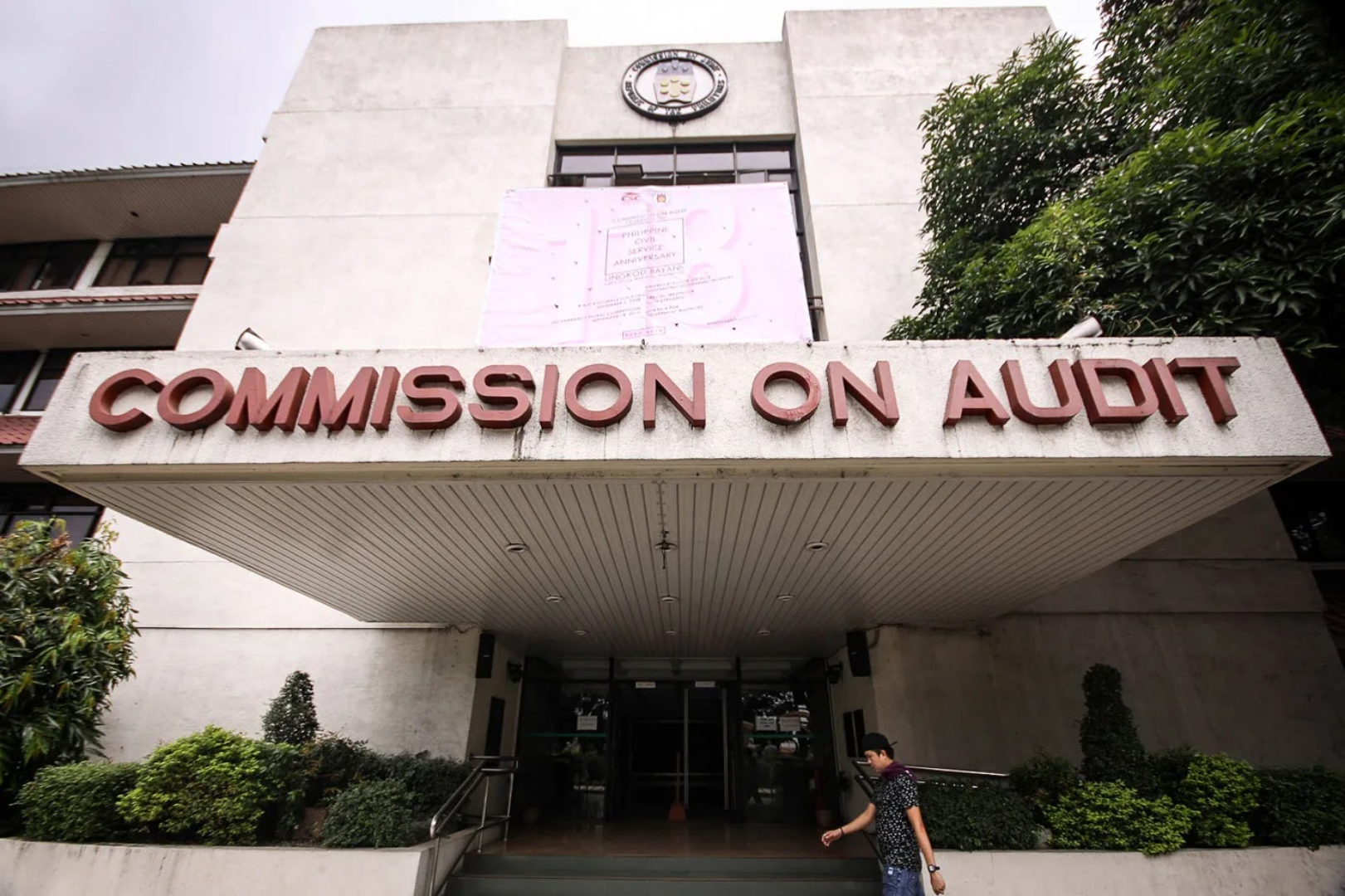
The Commission on Audit (COA) has flagged the Iloilo City Government for failing to ensure that public signboards for infrastructure projects contained accurate, complete and updated information, raising concerns over the transparency and monitoring of projects funded by taxpayers’ money.
In its audit findings on the city government’s programs, projects and activities for 2025, COA reported that an ocular inspection of 95 sampled projects found that the signboards of 18 ongoing projects had not been updated, while two school-building projects had no required project signboards. Another project signboard displayed an incorrect title that did not correspond to the actual undertaking.
The deficiencies were attributed to the Office of the City Engineer, which COA said had not adequately monitored the existence, accuracy and completeness of information displayed on signboards for the city’s infrastructure projects.
The audit finding cited noncompliance with COA Circular No. 2013-004, which requires government agencies and implementing offices to publicly disclose essential information about their programs, projects and activities through signboards or similar materials installed in conspicuous locations.
Outdated, missing and incorrect project information
According to COA, the signboards of 18 ongoing projects inspected by auditors had not been updated to reflect their implementation status.
The audit also found that the required project signboards were missing from the “Design and Build Scheme for the Construction of Iloilo City Hospital” and the “Construction of the 3-storey 15-classrooms (2 laboratory)” for Andres Bonifacio and Rizal Elementary Schools.
In addition, the signboard for the construction of a three-storey, six-classroom building with one laboratory in Arevalo carried an incorrect project title. Instead of identifying the classroom-building project, it described the undertaking as an “Additional Fund for Rehabilitation/Improvement of Public Plazas.”
These deficiencies meant that members of the public could not consistently rely on the project signboards to determine what was being constructed, the status of implementation and other essential details about the use of public funds.
COA Circular No. 2013-004 requires project signboards to disclose information such as the project name, implementing office, brief description, contractor or supplier, procurement mode, funding source, approved budget or cost, implementation period, completion dates and project location. It also prescribes the frequency for updating implementation status.
The requirements apply to government programs, projects and activities regardless of the amount or source of funding.
Transparency failures limit public scrutiny
COA stressed that the absence of signboards, or the presence of inaccurate information, deprives the public of its right to essential information concerning the use of government funds.
Project signboards serve as a basic public-disclosure mechanism, allowing residents, community organizations and other stakeholders to identify government-funded undertakings and compare reported progress against what is visible at construction sites.
When signboards are missing or outdated, the public has less information with which to assess whether a project is progressing according to schedule, whether the stated project corresponds to the work being undertaken and which office or contractor is responsible for implementation.
The Arevalo classroom-building project illustrates the problem. An incorrect title could mislead residents about the purpose of the construction and make it more difficult to match the physical project with its official description.
However, the signboard deficiencies alone do not establish that the projects were overpriced, irregularly awarded or involved misuse of public funds. Rather, they represent failures in a transparency mechanism intended to help the public scrutinize government spending and implementation.
Procurement and project-monitoring concerns
Although the audit finding focused on signboards, the required information also provides the public with basic details for scrutinizing procurement and project execution.
The disclosure of contractors, procurement methods, approved budgets, funding sources and implementation periods helps stakeholders identify the parties responsible for a project and compare its stated cost and schedule with other available government records.
If this information is missing, inaccurate or not updated, independent monitoring becomes more difficult. The public may have to obtain documents from other government offices to establish the project’s approved cost, contractor, funding arrangement or expected completion date.
The failure to update project status also weakens the usefulness of signboards as a monitoring tool. Without current information, residents cannot readily determine from the posted disclosures whether a project remains within its implementation period or whether reported progress warrants further inquiry.
Nevertheless, COA’s finding on signboards should not be interpreted as proof of procurement violations or cost irregularities. Establishing such violations would require examination of the relevant procurement documents, contracts, notices to proceed, accomplishment reports, billing records, variation orders and inspection or acceptance documents.
The audit finding instead highlights a control weakness that can undermine public oversight of those transactions.
City Engineer cites typhoon damage, missing signboards and oversight
When COA referred the observation to the City Engineer, the office’s focal person explained that project signboards had been installed for the projects.
The focal person said the Iloilo City Hospital project’s signboard had been damaged during a typhoon, while the signboards for the 15-classroom buildings at Andres Bonifacio and Rizal Elementary Schools could no longer be located.
The office committed to requiring the concerned contractors to reinstall the tarpaulins or signboards at the respective project sites.
Regarding the incorrect signboard for the Arevalo classroom-building project, the focal person attributed the error to an oversight, explaining that the information printed on the signboard had not been checked.
The focal person also acknowledged that the office had not updated implementation-status information because its personnel were unaware of the required frequency of updates under COA Circular No. 2013-004.
The explanations identify several distinct monitoring problems: signboards that were damaged or could not be located, information that was not checked before posting, and a lack of awareness of the rules governing updates.
While the office committed to corrective measures, the circumstances underscore the need for a system that regularly verifies not only whether signboards have been installed but also whether they remain visible, accurate and current throughout project implementation.
COA requires immediate correction and stricter compliance
COA recommended, and city management agreed, that the Office of the City Engineer immediately install standard COA signboards for all ongoing projects and update all information displayed on them.
The auditors also recommended strict compliance with the transparency and accountability mechanisms prescribed under COA Circular No. 2013-004.
According to management’s response in the audit report, the city had already reinstalled the signboard for the subject project, replaced the incorrect signboard for the hospital project and updated the hospital project’s implementation status.
Management also said it had incorporated geotagging procedures into its monitoring of programs, projects and activities to help verify the existence and accuracy of reported accomplishments.
These measures could strengthen verification if consistently implemented and supported by records that establish when projects were inspected, what work had been completed and whether the information reported matched actual site conditions.
The audit report, however, does not establish from the cited discussion whether every deficiency identified in the 95-project inspection had been independently verified as fully corrected.
Accountability must extend beyond installing signboards
The finding places responsibility on the Office of the City Engineer to ensure compliance with the disclosure requirements. It also raises questions about the internal controls used to supervise contractors, inspect project sites and keep public information accurate throughout implementation.
Accountability should therefore involve more than replacing damaged tarpaulins. The city needs a documented process for checking signboards at project commencement, during construction and when implementation status changes, with designated personnel responsible for verifying the accuracy of the information.
The office must also ensure that contractors comply with their obligations to install and maintain required project signboards, while the city’s monitoring personnel should verify that posted details agree with approved project documents and actual site conditions.
The use of geotagged photographs and site-inspection records could provide supporting evidence of project existence and reported accomplishments, but these measures should complement—not replace—compliance with the required public-disclosure rules.
Ultimately, the significance of COA’s finding lies in the public’s ability to independently scrutinize government infrastructure spending. When basic project information is missing, incorrect or outdated, the public loses a readily accessible means of checking what the government is building, how much it is supposed to cost and whether implementation is proceeding as reported.
For Iloilo City, the corrective challenge is to turn management’s commitments into a consistent monitoring system that keeps project information accurate, accessible and verifiable—and makes responsible offices answerable when required disclosures are not maintained.